Lost Worlds: How Underwater Archaeological Finds Are Reshaping Human History
Researchers are studying submerged territories known as 'Aquaterra', where ancient humans lived thousands of years ago.
 👥Society
Photo: UNIAN
Key points
- The term 'Aquaterra' refers to submerged coastal territories totaling 22.5 million sq. km.
- Archaeologists are finding traces of human activity underwater dating back over 12,000 years.
- Coastal erosion threatens historical sites from both ancient and more recent eras.
Over the last 120,000 years, sea levels have fluctuated significantly, submerging vast areas of land. Geographer Jerome Dobson coined the term "Aquaterra" in 1999 to describe these coastal regions, which total over 22 million square kilometers. During glacial periods, these lands were habitable, but they were eventually swallowed by rising seas.
Archaeological Discoveries on the Seabed
Modern technology now allows scientists to explore what was previously inaccessible. Archaeologists Michael Faught and Morgan Smith use mapping and soil analysis to identify traces of ancient settlements underwater. In the Gulf of Mexico and off the coast of Belize, artifacts dating back 9,000 to 12,000 years, including building remains and tools, have already been discovered.
Beyond ancient history, the sea also threatens relatively recent historical sites. Due to coastal erosion, even 16th-century sites, such as the Roanoke colony in the USA, are disappearing. Researchers warn that the rate of coastal loss is increasing, creating new challenges for the preservation of global cultural heritage.
Source UNIAN — unian.ua/science/pid-vodu-pishla-susha-rozmirom-iz-pivnichnu-amerik… ↗
Read next
 🛡️Security
Fire Point reveals technical differences between FP-7 and FP-9 ballistic missiles
The weapon developer Fire Point explained the differences between its ballistic projects, which serve different tactical purposes.
 🛡️Security
Ukraine and Norway to Scale Up Production of DESNA Air Defense Systems
The Ukrainian Ministry of Defense has announced plans to increase the production of DESNA air defense launchers in partnership with Norway.
 🛡️Security
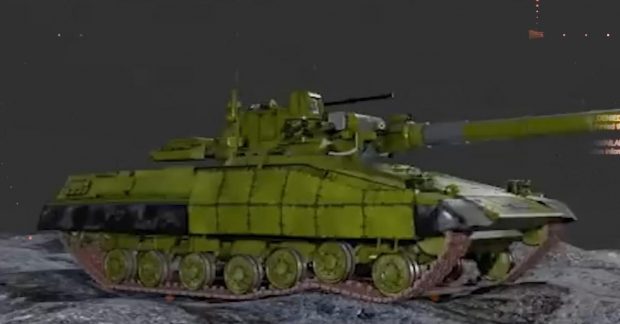
Rare photo of the experimental 'Object 477A1' tank released online
An archival image of the top-secret Ukrainian 'Nota' tank, which began development in the early 1990s, has surfaced on the internet.
 🛡️Security
Court upholds detention for Valentina Molodaya: details of the incident near Kyiv
The Kyiv Court of Appeal rejected the defense's appeal and upheld the detention of a woman suspected of obstructing the activities of the Armed Forces of Ukraine.
 🏛️Politics
EU to Discuss Financial Support Strategy for Ukraine for 2027 and Beyond
EU leaders will gather in Brussels to discuss the long-term budget and mechanisms for supporting Ukraine.
 💡Tech
Why your new TV looks worse at home: 5 settings to improve picture quality
New TVs often underperform at home due to factory retail settings. Experts share how to adjust your device to get the high-quality picture you paid for.